The 34th annual Fall Flower and Garden Fest is Oct. 5 and 6 at MSU’s Truck Crops Experiment Station in Crystal Springs. The event is open each day from 9 a.m. to 2 p.m.
This festival celebrates everything about the garden and is one of the best free horticulture field days in the entire Southeast. The weekend event offers something for the entire family. All of the Experiment Station gardens and grounds, seminar areas and wagon tours are handicapped accessible. Vendors will be selling food and drinks at the event for lunch.
This year’s theme of “Healthy Living – Healthy Gardening” will kick off at 9:30 a.m. Oct. 5 with a 1-mile fun walk organized by the Let’s Go Walkin’ Mississippi initiative.
The 3-acre garden site will offer everyone from garden novices to Master Gardeners lots to see and learn. Visitors can view a great selection of tough roses, ornamental grasses, tropical plants, and of course, fall vegetables and herbs.
Mississippi Medallion winners and plants from the All-America Selections program will be featured. The tropical garden, with its giant banana plants, is a favorite of visitors every year.
Numerous educational activities are planned as well. Master Gardeners and MSU specialists will present non-stop seminars and exhibits on managing ponds, beekeeping, composting, creating backyard habitats, establishing flower trails and growing favorite garden plants.
Walking tours will allow visitors to investigate research projects at the branch station. The project on agri-ability will show ways those with decreased mobility can access the garden. Other tour topics include insects and diseases, high tunnels, and vegetable gardening.
Across the lake, vendors will sell popular, new plants perfect for fall planting and must-have landscape accessories.
I will be there along with other horticulture experts from MSU to answer tough garden and landscape questions. Most experts will be wearing blue vests.
The Truck Crops Branch Experiment Station is located south of Crystal Springs about 25 miles south of Jackson on Highway 51. Turn on to Experiment Station Road
Crystal Springs, MS 39059 across from the Rolling Hills Country Club.
Sunday, September 30, 2012


Tuesday, September 18, 2012
Fall Greens Garden
 |
| Red Giant mustard |
'Red
Bor' kale has crinkly red leaves that turn a deep burgundy in fall. 'Red
Russian' kale has blue-green leaves with attractive red veins
'Bright Lights' Swiss chard features dark
green leaves with colorful ribs of red, yellow, pink, or white.
If
you like mustard greens, try ‘Red Giant’ or ‘Osaka Purple’ varieties. Their
different color is eye-catching.
There
are many types of leaf lettuces that will produce fast crop. ‘Black Seeded Simpson’ lettuce is a perennial
favorite. Or try oak leaf types in green
or red for a different look.
Spinach
is great cool-weather crop that grows much better in the fall than in the
spring. Try growing the crinkle-leaved
'Tyee' or 'Winter Bloomsdale'.
You do not have to relegate these crops to the vegetable garden. You can remove tired flowers from containers and pop in some turnip or lettuce seeds. Or replace your annual flower beds with colorful, edible ornamental greens.
If you’d like more information fall vegetable
growing, contact your local Mississippi State University Extension Service
office and we’ll do our best to ensure you have a successful fall garden.
Sunday, July 29, 2012
Insects Eating Figs and Other Fruit
Figs are getting ripe and muscadines and oears are not far behind. With their ripening come wasps, yellow jackets, bees, and other insects looking for a sweet meal. There are not synthetic insecticides that can be sprayed to control these problems in figs. You might can use an organic spray such as pyrethrum. Malathion and carbaryl (Sevin) can be used in pears and muscadines but there is a 7 and 3 days waiting period respectively.
You can purchase various traps or you can try the following idea.
The gentleman’s solution was to cut the neck
off a 2 liter soda bottle and invert it into the neck of the bottle, stapling
it around the edge where the two pieces of bottle meet. This puts the neck of
the bottle down into the bottle.
You can purchase various traps or you can try the following idea.
This was passed
on to us by someone who has had success killing yellow jackets in and around
the fig tree, and should work when the pears begin to ripen. It was suggested that this also can be used
with muscadines and grapes.
Put 1 teaspoon of honey
inside at the bottom. Add a pint of
water and mix well. Sit or hang the
bottle near the fig or other fruiting tree.
Once the yellow jackets and wasps go into the bottle, they cannot get
out, so this helps eliminate them. Other
suggestions were sweets like cola or syrup.
They seem to link the amber brown color Once inside the bottle, the insect is trapped
and cannot get out. Hang your bottles just as the fruit begins to ripen
Wednesday, April 18, 2012
Southern Magnolia Leaf Drop
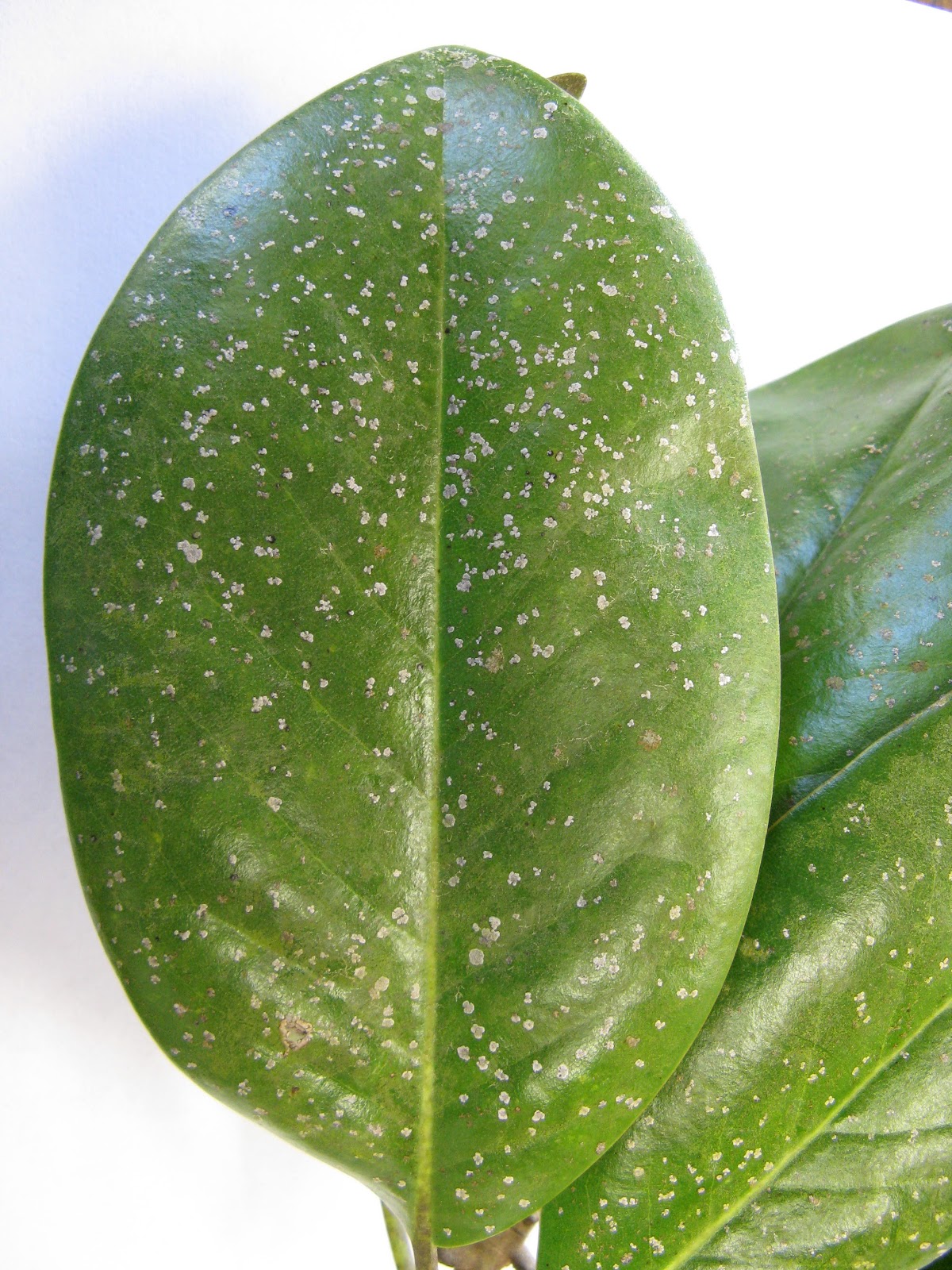 |
| Algal Leaf Spot |
Most Southern magnolia trees are grown from seed, and they exhibit a great deal of variability in leaf shedding since each tree is slightly different. Some trees may become completely bare before new foliage comes out. When trees are propagated by grafting or from cuttings, all trees will have about the same amount of leaf drop since they are clones.
Regardless of propagation method, the degree of leaf drop can also be associated with environmental conditions. An extremely cold winter or a dry spring can result in accelerated or additional leaf drop. Large trees with root systems restricted by to sidewalks or planting islands may drop more leaves since their restricted root system are not as able to supply the tree with water and nutrients during periods of stress.
This spring has been wetter and warmer than usual and this resulted in a increase in algal leaf spot. This also causes increased defoliation. Best control is to clean up and destroy diseased leaves.
You might want to apply 4 cups per 100 square feet of 13-13-13 or similar fertilizer to give them a little boost this year.
Wednesday, April 4, 2012
Pest Alert: Azalea Leaf Gall
 |
| Azalea leaf gall |
This disease appears early in the spring. The new leaves and buds that are infected develop distorted growth. The leaves become thickened, curled, and pale green to white and in some cases pink. Leaves can be ten times thicker than normal leaves. The infected leaves are covered with a white powdery substance in the latter stages of the disease. Galls eventually turn brown and harden as the season progresses.
Fundal spores overwinter in the bark. When the buds open in the spring, the spores are blown by the wind to the plant. Rain can also wash spores from the bark to the plant tissue. Spores need moisture to germinate. Plants that are grown in areas of poor air movement, deep shade, and high humidity are more likely to be infected. After the plant is infected, the fungus stimulates a growth promoting process which causes the thickening and distortion of the plant.
There are some varietal differences among azaleas in susceptibility. Reported resistant varieties include: Gloria, Sensation, Coral Bells, Mrs. G. G. Gerbing, Sunglow, and Formosa.
The disease usually does not do enough damage to require chemical control. If only a few plants are affected, prune the galls of the plant and throw them in the trash. If the same plants get infected year after year then might be chemical control necessary. Begin treat with captan, mancozeb, or triadimefon fungicide sprays starting wien the young leaves begin to unfurl then every 10 14 days after that until the young leaves mature.
Another procedure for controlling azalea leaf gall on badly diseased plants is to cut plants back severely. This is a good sanitation procedure and is a good way to reduce disease occurrence the following season because galls will be removed along with the pruned branches. It is also advisable to replace mulch beneath such plants since this will insure that fallen galls beneath plants will be removed.
Subscribe to:
Posts (Atom)